3 and 30 Freedom September

St. Francis spent hours in deep prayer, meditating so intensely on the physical and emotional suffering of Jesus that he often wept uncontrollably, sometimes losing his sight or voice from endless mourning over Christ's crucifixion. He connected Christ's sacrifice on the cross directly to the Eucharist, viewing the Mass as the humble, abiding presence of the crucified and risen Lord. St Francis linked Our Lady’s profound humility and poverty directly to the life and sufferings of Jesus. Although no historical evidence that directly links St Francis to Our Lady under the title Our Lady of Sorrows, his devotion to the suffering of Jesus and his love for Our Lady suggest that he meditated on the sorrows of Our Lady at some point in his life.
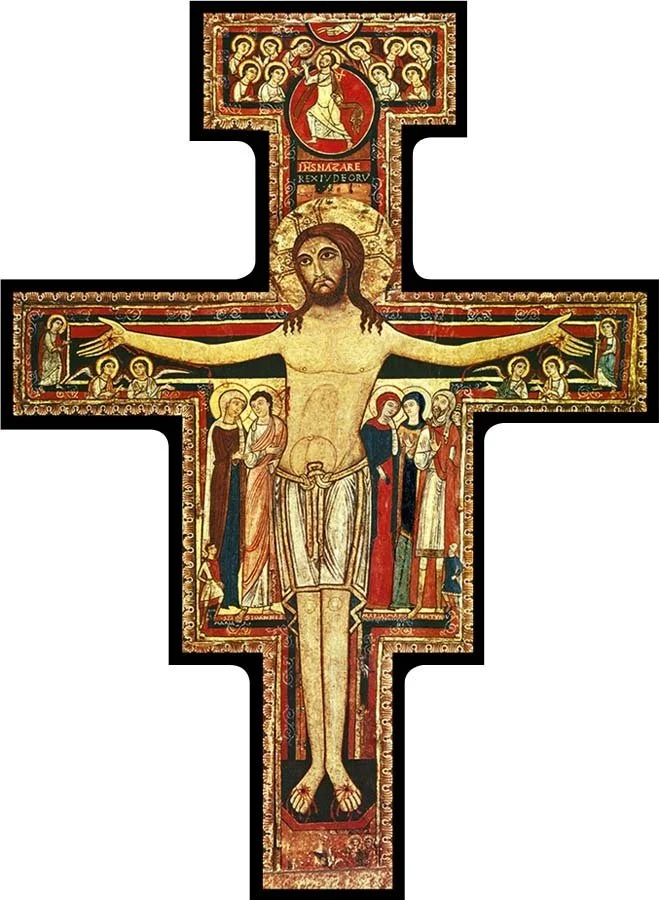
The San Damiano Cross depicts five witnesses of the crucifixion. On the left side are the Virgin Mary and St. John the Evangelist. On the right side are Mary Magdalene, Mary, Mother of James, and the centurion who in Matthew's Gospel account asks Christ to heal his servant, who is also depicted on the cross on the shoulder of the centurion (Matthew 8:5-13). Both Mary and Mary Magdalene have their hands placed on their cheeks to reflect extreme grief and anguish.
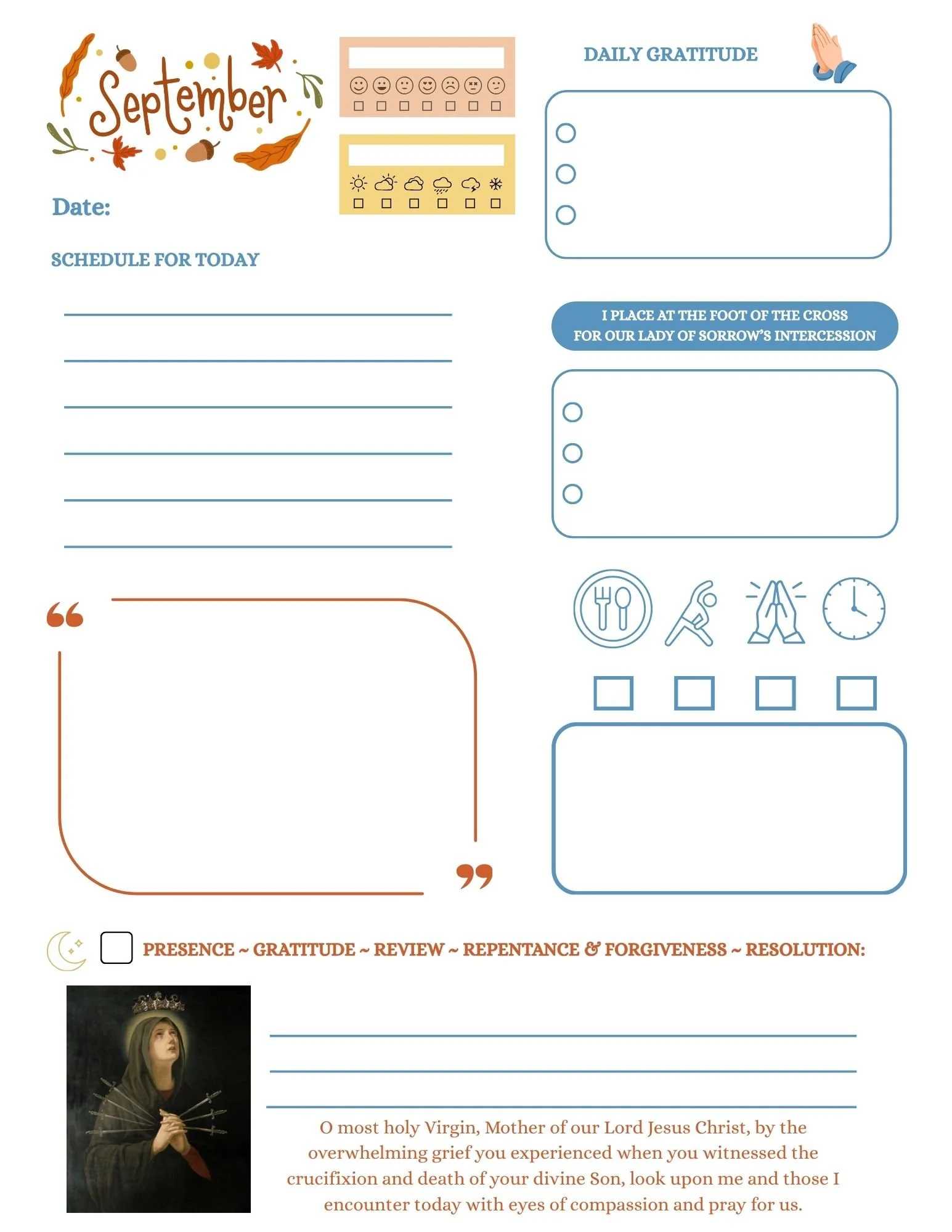
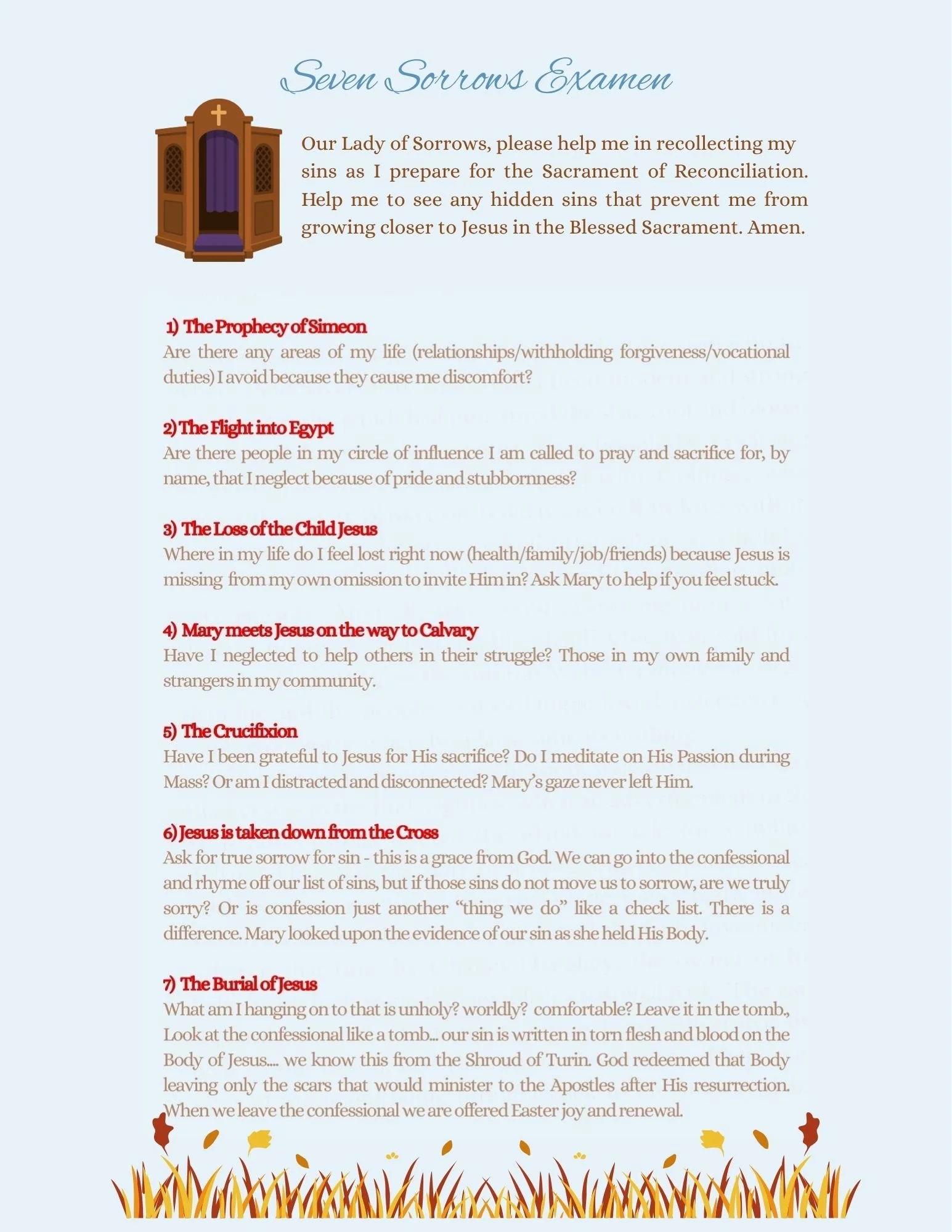

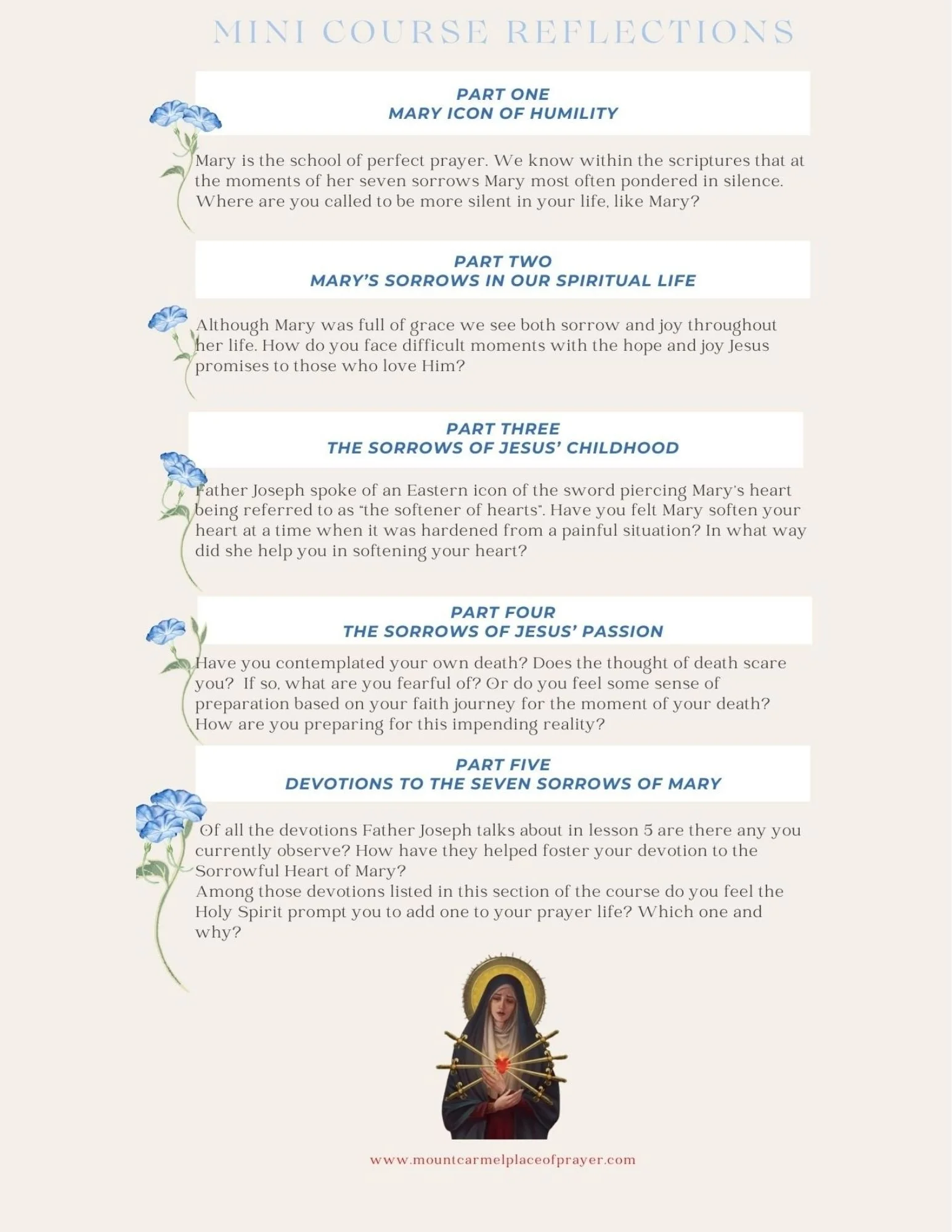
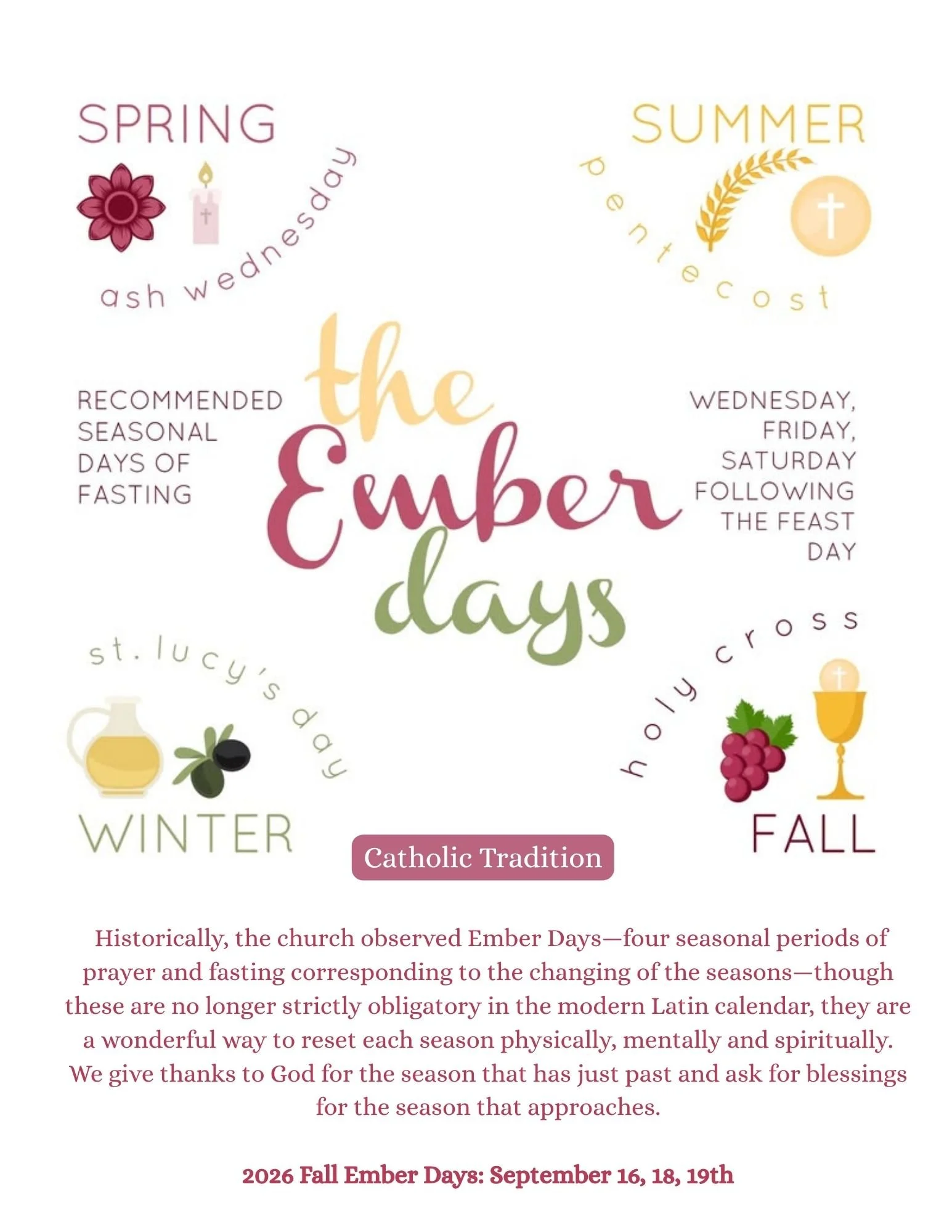

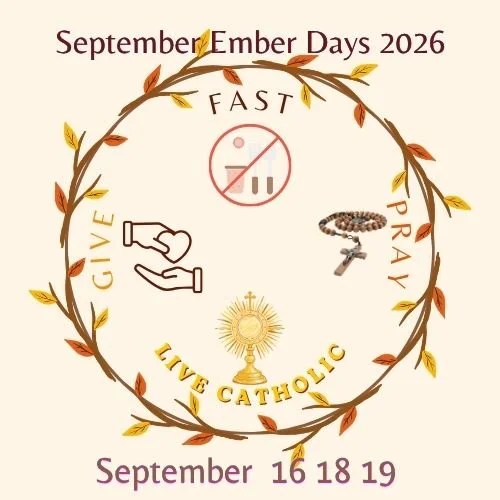
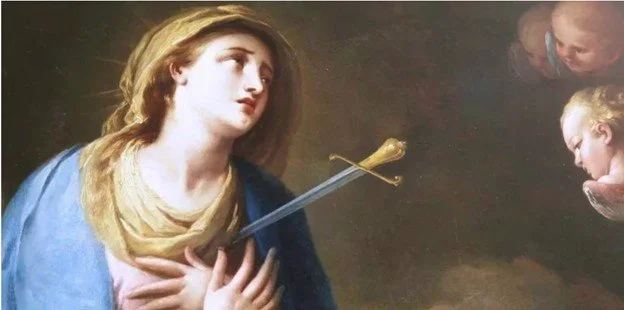
The month of September is dedicated to the Seven Sorrows of Mary. Devotion to the sorrows of the Virgin Mary dates from the twelfth century, when it made its appearance in monastic circles under the influence of St. Anselm and St. Bernard. The Cistercians and then the Servites undertook to propagate it. It became widespread in the fourteenth and especially the fifteenth centuries, particularly in the Rhineland and Flanders, where Confraternities of the Sorrowful Mother sprang up. It was in this context that the first liturgical formularies in her honor were composed.
Pope Pius VII issued a formal decree through the Sacred Congregation of Indulgences on June 13, 1815, approving and enriching the specific prayers and devotions for the Seven Sorrows of Mary. Pope Pius VII approved the structured form of daily meditation and prayers for the Seven Dolors (Sorrows) in 1815, and later added further indulgences in 1818.
Indulgences Granted: The decree granted partial and plenary indulgences to the faithful who practiced daily meditation on the sorrows and recited the associated prayers.
Historical Context: Earlier popes (such as Benedict XIII, Clement XII, and Clement XIII) had recognized aspects of the Servite chaplet, but Pius VII's 1815 decree broadly promoted and standardized the modern form of the devotion
As part of the mission work of Mount Carmel Place of Prayer, one sword of sorrow is meditated on daily with scripture references between each Hail Mary prayed. Following this set chaplet (as prayed above) the Litany of Our Lady of Sorrows written by Blessed Pope Pius VII is prayed for the intentions of our 3 and 30 group, for the intentions that are submitted to our website and instagram page and for the continued conversion and eternal salvation of all the souls in the mission fields of Mount Carmel Place of Prayer - 7 days, 7 swords - every day without exception all year long.