THEOLOGY OF THE BODY
Through a short series of talks, Fr. Mike will unpack the basics of Pope St. John Paul II's Theology of the Body and why these teachings are vital in today's culture.
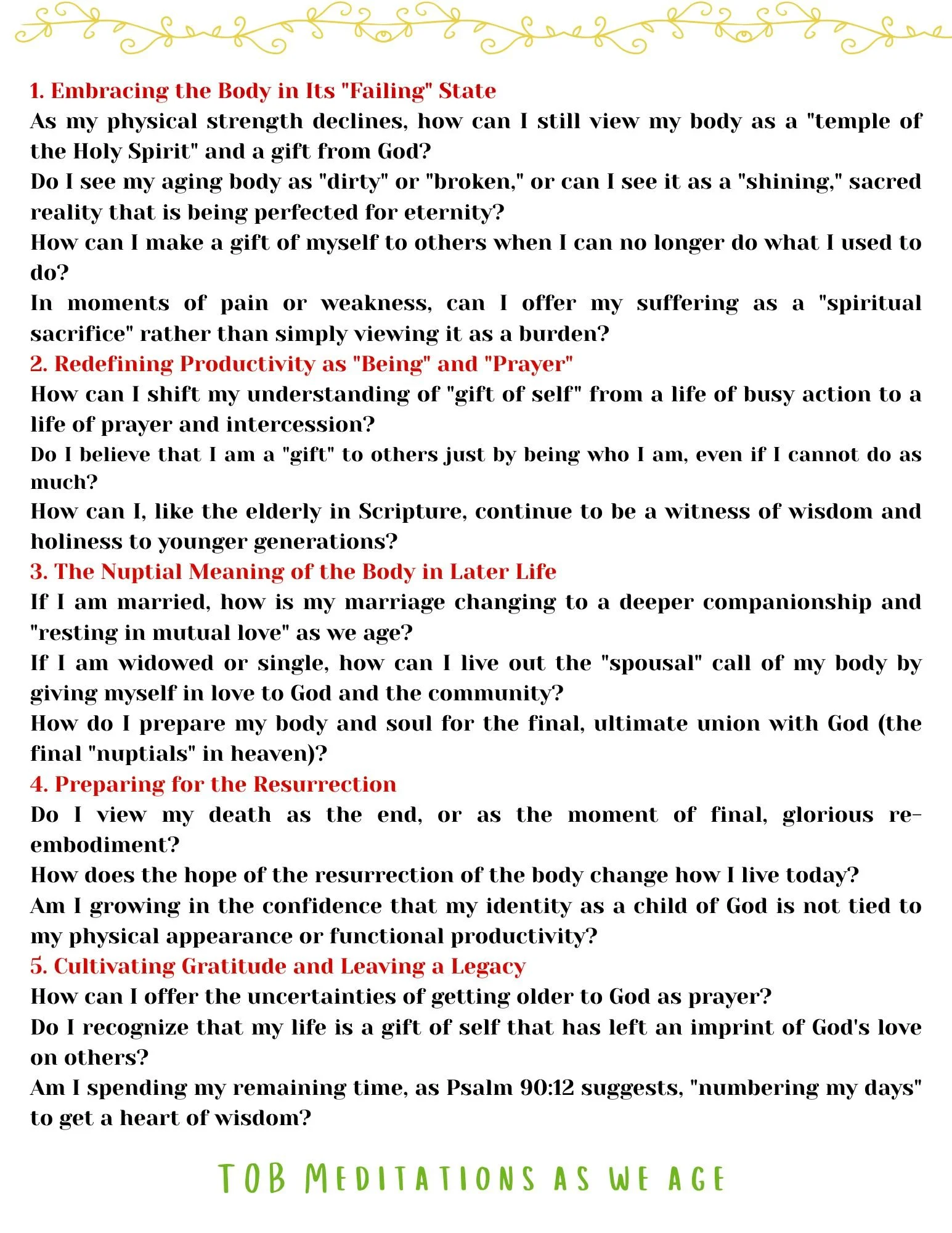
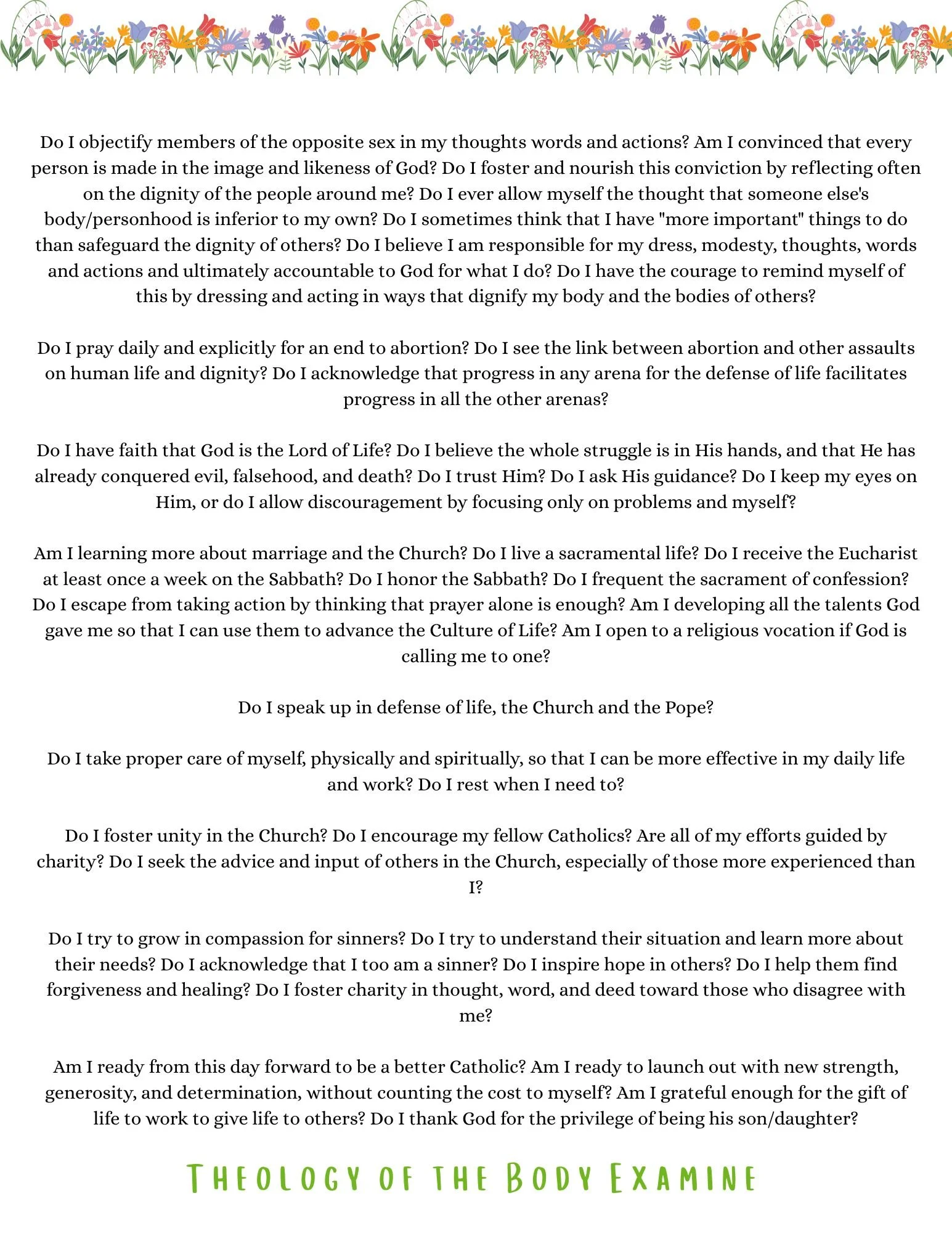
As part of our 3 and 30 Freedom Easter journey, I invite you to watch these videos. I realize that we are all at different stages of our lives, and the topic of procreation might be well past our timeline for some of us who are married. But I believe “theology of the body” can extend beyond sexuality. I believe we live out theology every day in our bodies with the choices we make to follow Christ. As you watch this series, ask the Holy Spirit to highlight where each talk speaks into your life.
As Pope St John Paul II said, “We are an Easter people, and Alleluia is our song!” If you are anything like me, you strive to do well in Lent (and some years I do, some years I don’t), but Easter flies by without really digging into the season.
My invitation to you is to watch one of these videos a week and ponder what the Holy Spirit says to you. If you are part of our 3 and 30 group, I’ve already emailed you the PDF notes that go with this study. If you are new to our website and have stumbled upon this page and want to dive into the course, please email me with a request to send the PDF document, and I will attach it in my reply ~ mountcarmelplaceofprayer@gmail.com
The Body as a “Theology”
● Theology is the “study of God”. How can the body be a theology?
● The very “logic” of Christianity.
● Through the fact that the Word of God became flesh the body entered theology…through the main door” (TOB, 89)
● “The flesh is the hinge of salvation” (Tertullian). Because God is “hidden,” he has chosen to reveal Himself in and through the flesh. In this, He has revealed His innermost secret.
Freedom from the Law and the “New Ethos”
If “you are led by the Spirit, you are not under the Law” (Gal 5:18)
● We all know that laws, in and of themselves, do not change hearts.
● Christ did not come to give us more “rules” to follow; He came to change our hearts (ethos) so that we would no longer need the rules.
Ethos:
Refers to our inner world, what attracts and repulses us.
● In effect, Christ says, “You’ve heard the commandment not to commit adultery, but the problem is you desire to commit adultery.”
● Those bound by lust “experience God’s law as a burden, and indeed as…as restriction of their own freedom. On the other hand, those who are impelled by love…feel an interior urge…not to stop at the minimum demands of the Law, but to live them in their ‘fullness.’ This is a still uncertain and fragile journey as long as we are here on earth, but it is one made possible by grace” (VS, 18).
Freedom from the law means not having a desire to break it. Those compelled do not want to stop at the minimum demands of the law.
The Four Loves:
1. Storge (Affection): It’s the familiarity of, “the people with whom you are thrown together in the family, the college, the mess, the ship, the religious house,” says Lewis. The affection for the people always around us, in the normal day-to-day of life, is the majority of the love we experience, even if we don’t label it.
2. Eros (Love of Desire): The fire/passion necessary to show love. The inner power which attracts man to the good, true, and the beautiful. Different than friendship, lovers, “are always talking to one another about their love” and “are normally face to face, absorbed in each other,” says Lewis. The danger in romantic love is to follow blindly after a feeling of passion.
3. Philia (Friendship): “Friendship must be about something,” Friendship allows individuals to walk side by side with something in common. C.S. Lewis says, “those who have nothing can share nothing; those who are going nowhere can have no fellow-travelers.”
4. Agape (Self-Sacrificing): the unconditional love of the Father given to us through his Son.
How to Change the Ethos?
Prayer
Lord, untwist in the heart all that has been twisted by sin in the people I am praying for right now (include yourself/spouse/children if this applies). Help me to see every woman and man as Thy daughter or son. Help me to love her/him as You do.
“I had thought that [chastity] arose from one’s own powers, which I did not recognize in myself. I was foolish enough not to know…that no one can be [chaste] unless you grant it. For you would surely have granted it if my inner groaning had reached your ears and I with firm faith had cast my cares on you” (St. Augustine, CCC, 2520).
Discipline.
“I have made a covenant with my eyes.” (Job 31:1)
Rooted in the heart, but carried out in action.
“The person [who wants] to succeed in mastering [sexual] impulse and excitement, must be committed to a progressive education in self control of the will, of the feelings, of the emotions; and this education must develop beginning with the most simple acts in which it is relatively easy to put the interior decision into practice” (TOB, 408)
“Know Thyself” Do not be afraid